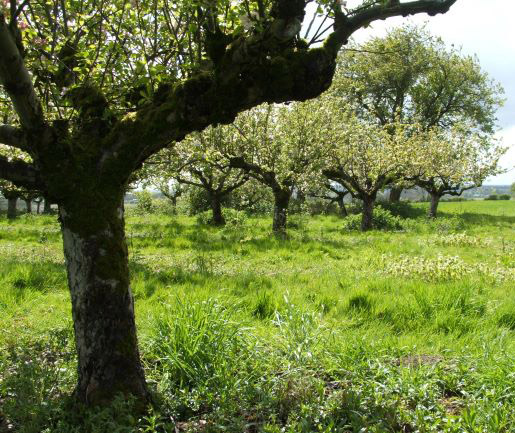
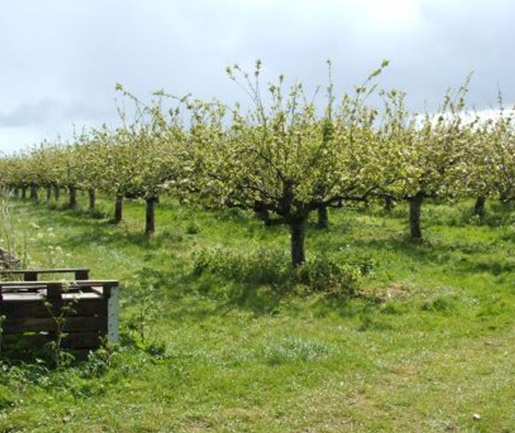
Orchards are disappearing from the eastern counties for several reasons:
If you are concerned that an orchard or a prominent fruit tree, or group of fruit trees, is being threatened, talk to the landowner or local residents to understand the threat level. If you are still concerned, contact your Local Authority’s Tree Officer or equivalent officer in the planning department. Contact us if you need help.
Criteria for protecting orchards
Orchards and fruit trees only enjoy statutory legal protection if they are:
There are also various national and local non-statutory (mainly advisory as opposed to legally binding) regulations that apply to orchards and fruit trees, especially when they become the subject of planning applications. They are primarily designed to help protect the landscape from inappropriate development and further information about these can be found at the planning department of your Local Authority. Examples of these are:
Local Development Framework (LDF) – these are strategic planning policies and most Local Authorities in our region list traditional orchards in their completed LDFs because they believe them to be important landscape features worthy of conserving wherever possible.
Planning Policy Statement 9 (PPS9): Planning for Biodiversity and Geological Conservation – all local authority planners can refer to this nationally recognised planning policy, whenever an orchard is threatened. This gives them various options for taking further action against the owners of a threatened site.
County Wildlife Sites (CWS) – a designation applied to areas which have been recognised as biodiversity-rich. CWS’s are gradually being incorporated into Local Development Frameworks so there will be a greater presumption against development on such sites in the future.
Local Biodiversity Action Plan (BAP) – since 2007, when traditional orchards became a Priority UK Biodiversity Habitat, several County Councils in our region have included traditional orchards in their list of BAPs. These work as framework documents, outlining targets for conserving and enhancing that county’s orchard habitat. To see if orchards feature in your county’s Biodiversity Action Plan see: www.naturalengland.org.uk/ourwork/conservation/biodiversity/protectandmanage/ localbiodiversity.aspx
| Cookie | Duration | Description |
|---|---|---|
| cookielawinfo-checkbox-analytics | 11 months | This cookie is set by GDPR Cookie Consent plugin. The cookie is used to store the user consent for the cookies in the category "Analytics". |
| cookielawinfo-checkbox-functional | 11 months | The cookie is set by GDPR cookie consent to record the user consent for the cookies in the category "Functional". |
| cookielawinfo-checkbox-necessary | 11 months | This cookie is set by GDPR Cookie Consent plugin. The cookies is used to store the user consent for the cookies in the category "Necessary". |
| cookielawinfo-checkbox-others | 11 months | This cookie is set by GDPR Cookie Consent plugin. The cookie is used to store the user consent for the cookies in the category "Other. |
| cookielawinfo-checkbox-performance | 11 months | This cookie is set by GDPR Cookie Consent plugin. The cookie is used to store the user consent for the cookies in the category "Performance". |
| viewed_cookie_policy | 11 months | The cookie is set by the GDPR Cookie Consent plugin and is used to store whether or not user has consented to the use of cookies. It does not store any personal data. |